
Zopiclone vs Other Sleeping Pills – A Clear UK Comparison Guide
Short answer: Zopiclone works differently from many other sleeping pills and is often chosen in the UK for short-term insomnia because it offers a balanced sleep duration with more predictable next-day effects.
Understanding how Zopiclone compares with other sleeping pills helps UK adults make clearer and safer short-term choices. This guide explains the key differences in how these medicines work, how long they last, and what people commonly experience.
Why do sleeping pills differ in how they work?
Sleeping pills affect sleep in different ways depending on how they interact with the brain or the body. Some medicines calm overactive brain activity, others help regulate the sleep–wake cycle, and some cause drowsiness as a side effect.
Because of these differences, two people can have very different experiences with different sleeping pills, even when treating similar sleep problems.
What is Zopiclone?
Zopiclone is a short-term sleep medicine used in the UK to help adults with insomnia fall asleep and stay asleep. It works by calming brain activity that keeps the mind alert at night.
Zopiclone is usually considered when:
- Sleep disruption is short-term
- Falling or staying asleep is difficult
- A full night’s rest is needed
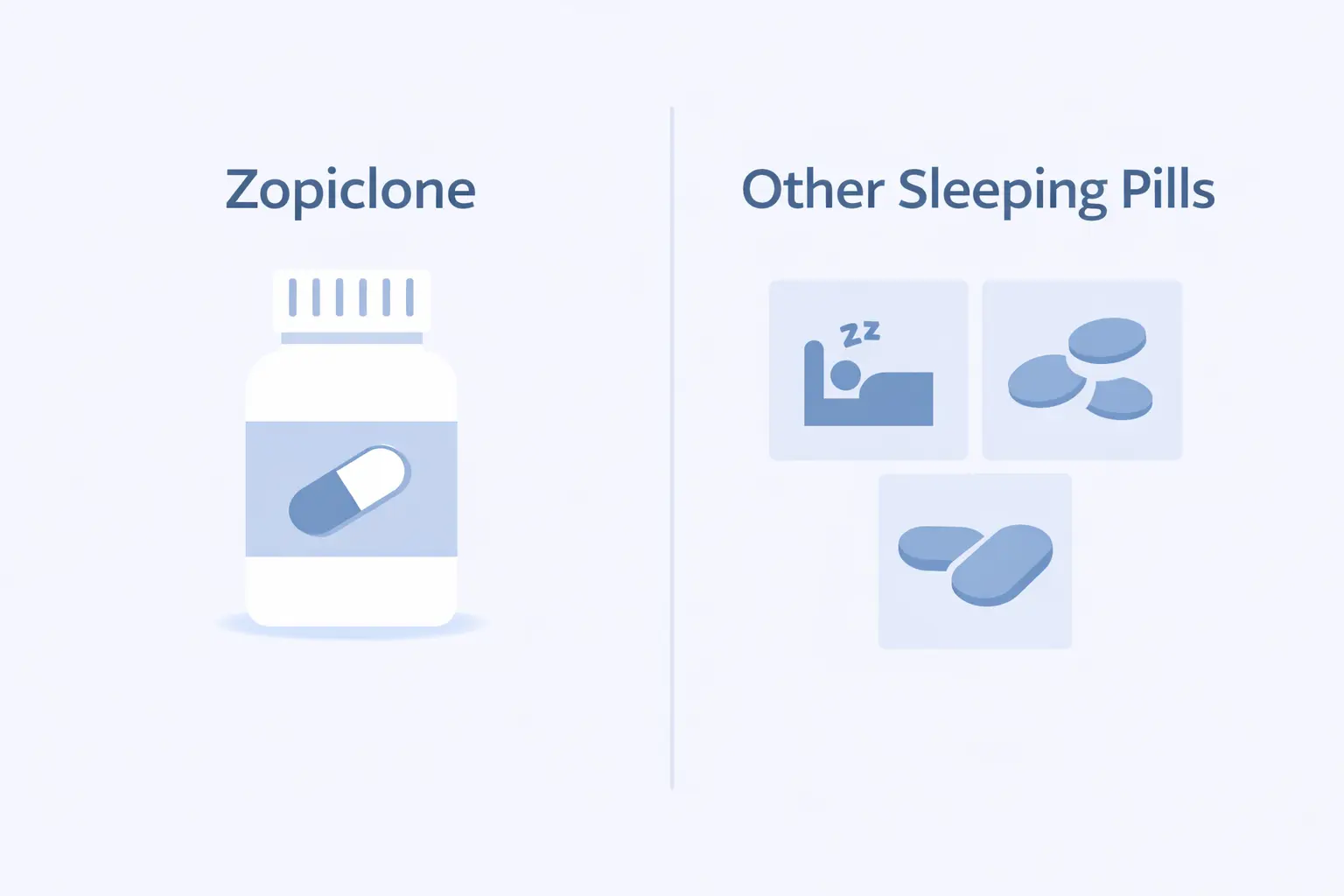
How does Zopiclone compare to benzodiazepine sleeping pills?
Compared to benzodiazepines, Zopiclone is generally considered lighter and more specifically targeted for sleep. Benzodiazepines often have broader effects on the nervous system, which can feel stronger and increase next-day sedation.
- Benzodiazepines can feel heavier overall
- Zopiclone often wears off in a more predictable way
- Many UK adults prefer Zopiclone for short-term use
Zopiclone vs melatonin – what’s the difference?
Melatonin supports the body’s natural sleep–wake rhythm, while Zopiclone actively calms brain activity to help trigger sleep. Melatonin is gentler and often used for timing-related sleep problems.
- Melatonin → mild or timing-related sleep issues
- Zopiclone → short-term, disruptive insomnia
Zopiclone vs antihistamine sleep aids
Antihistamine sleep aids cause drowsiness as a side effect, whereas Zopiclone is designed specifically to support sleep. Antihistamines often cause heavier morning grogginess.
Many UK users find Zopiclone more predictable and better aligned with a full overnight sleep duration.
Zopiclone vs Other Sleeping Pills – UK Comparison
| Sleep Aid | How It Works | Typical Duration | Morning Feel |
|---|---|---|---|
| Zopiclone | Calms brain activity | 6–8 hours | More predictable for many |
| Benzodiazepines | Broad nervous system sedation | Longer-lasting | Heavier, more sedation |
| Antihistamines | Causes drowsiness as side effect | Variable | Sluggish, heavy |
| Melatonin | Regulates sleep–wake rhythm | Short | Usually minimal |

Understanding how Zopiclone compares with other sleeping pills helps UK adults make safer short-term choices about sleep support. For broader explanations and sleep education, you can explore additional guides on
HappySleep.uk.
If you are researching availability alongside safety information, information about accessing Zopiclone in the UK can be explored as part of a responsible, short-term approach.